Jump to:
- Quick answer: tree removal cost in Brisbane
- Why prices vary so much
- Do you need a permit before you get quotes?
- Cost by tree size
- Stump removal cost
- What a cheap quote often leaves out
- Does the tree itself change the price?
- DIY removal: why it usually costs more in the end
- How to get an accurate quote
- Bottom line: tree removal cost in Brisbane
- FAQ: tree removal cost in Brisbane
Quick answer: tree removal cost in Brisbane
Tree removal in Brisbane typically costs between $250 and $15,000, depending on size and access. A medium tree with easy access averages around $1,940.
Size sets the starting point. Access, nearby structures, and what the quote actually includes decide where you land in that range.
The only way to get a number specific to your tree is a site visit, because no two jobs are quite the same.
Why do prices vary so much?
Four things explain most of the gap between a cheap quote and an expensive one for what looks like a similar tree.
Height and trunk width set the baseline. A bigger tree means more wood, more weight, and more time on site.
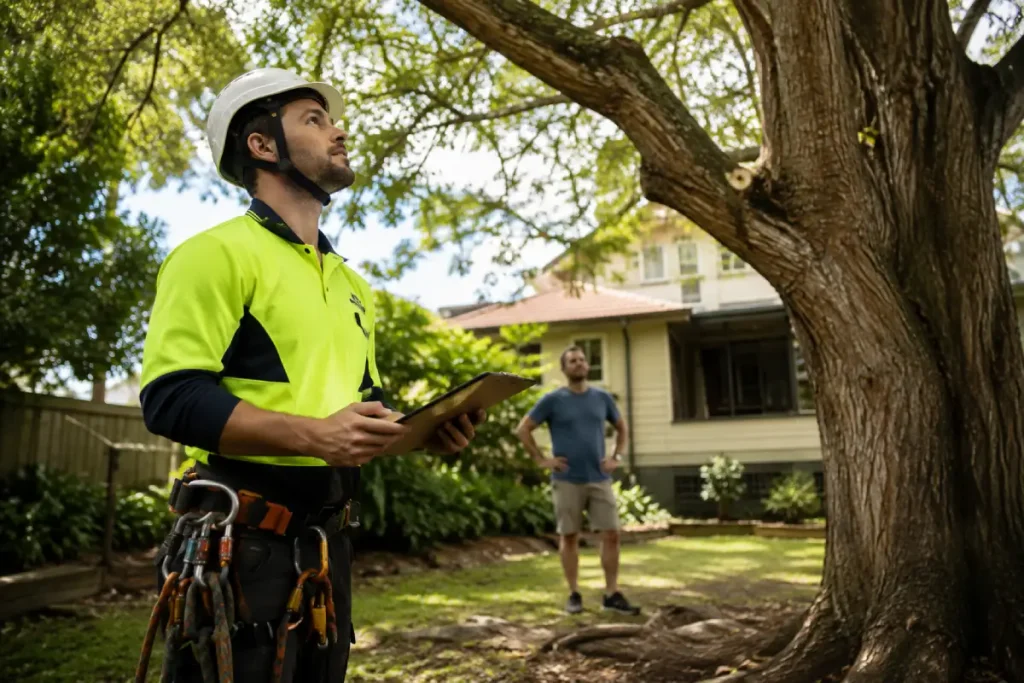
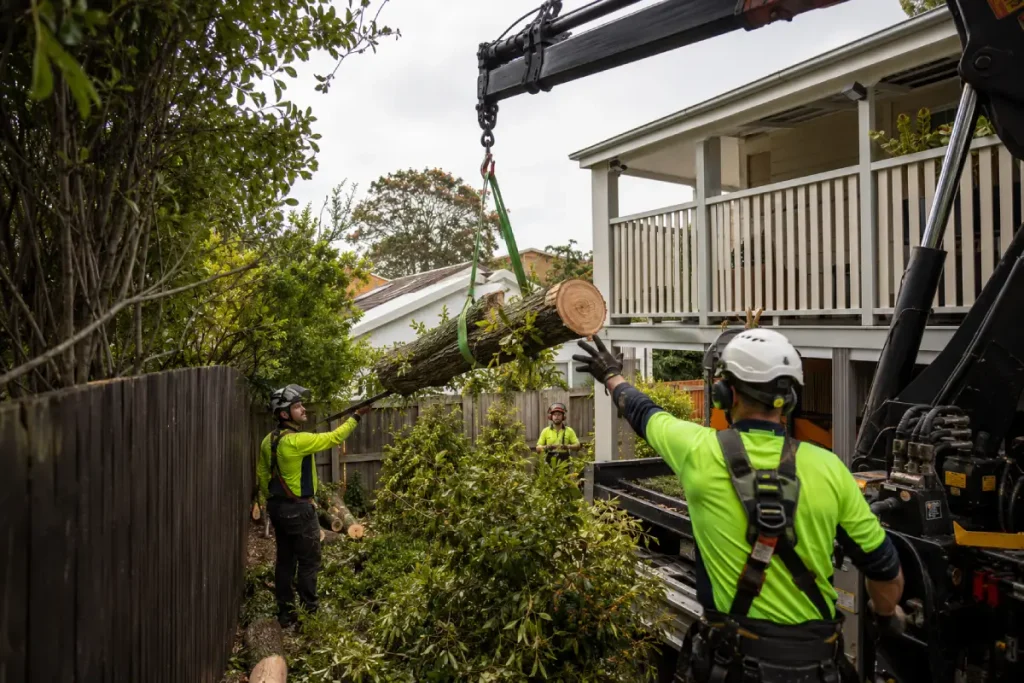
Access often matters more than size. A front-yard tree a truck can reach directly can cost half as much as the same tree stuck in a tight backyard.
Distance from structures, fences, or power lines adds a safety cost, since crews have to work more carefully and sometimes bring extra gear.
What’s included changes the final number more than any other factor. Waste removal and stump grinding are often quoted separately, which is where a “low” price can end up costing more once the job is actually done.
Do you need a permit before you get quotes?
Some Brisbane trees need Council permission before removal, even on your own property. This doesn’t usually change the removal price, but it can change your timeline.
Cost by tree size
| Tree size | Height | Typical cost (AUD) |
| Small | Under 5m | $250 – $800 |
| Medium | 5m – 10m | $800 – $3,500 |
| Large | 10m – 15m | $2,500 – $6,000 |
| Extra-large | 15m+ | $5,000 – $15,000+ |
These ranges come from published Australian tree-service price guides for 2026 and shift by region, access, and the individual arborist. A Brisbane quote for a medium tree with good access usually sits toward the lower end.
Stump removal cost
Stump removal is almost always quoted on top of tree removal, not bundled in. Price scales with stump width.
- Small stump: $80 – $225
- Medium stump: $150 – $300
- Large stump: $300 – $500+
A rough industry rule of thumb multiplies the stump’s width in centimetres by $2 to $3. A look at the actual stump always beats a formula.
Does the tree itself change the price?
Species and condition move the price too, not just size. Palms need different handling than a gum tree of the same height, since their fibrous trunk and crown shape call for different cutting techniques and equipment.
A leaning or storm-damaged tree usually costs more than a healthy one of the same size. Crews have to rig it more carefully to control how and where it falls.
What a cheap quote often leaves out
The lowest number on paper isn’t always the cheapest job once the truck leaves. Three gaps cause most of the surprises after the fact.
Stump grinding is the most common one. A tree removal quote doesn’t automatically include it.
Green waste disposal is another. Some quotes cover felling the tree only, and leave mulching or debris removal as a separate charge.
Insurance and certification matter most when something goes wrong. An uninsured or unlicensed operator can look cheap right up until they damage your property.
DIY removal: why it usually costs more in the end
Cutting down your own tree looks like the cheapest option until something goes wrong. Safe Work Australia publishes specific guidance on managing the risks of tree trimming and removal work, including fall hazards, because the work carries real injury risk even for people who do it often.
A DIY job near power lines, fences, or a neighbour’s roof adds property-damage risk that a professional quote already prices in through insurance. If a branch damages a structure or a line goes down, the clean-up and repair bill is usually far more than the removal quote would have been.
There’s also the permit issue from earlier. An arborist typically knows what needs Council approval before cutting; a DIY job can end with a fine on top of a removal you already paid for in time and equipment hire.
How to get an accurate quote
A phone estimate based on a size description is a starting guess, nothing more. An accurate number needs someone to actually look at the tree, its access, and anything nearby that could affect it.
Ask any quote to list removal, stump handling, and waste disposal as separate line items, so you can compare it fairly against another quote. Confirm insurance and arborist qualifications before work starts, not after.
Bottom line: tree removal cost in Brisbane
Tree removal in Brisbane generally runs from $250 for a small, easy-access tree to $15,000 or more for a large tree in a hard spot. Size sets the starting point, but access and what’s included in the quote decide where you land.
There’s no single “right” price without seeing the tree, so treat every figure here as a planning estimate, not a quote.
For a fixed price based on your actual tree and site, Tree Lopping Brisbane can arrange a free, no-obligation assessment or get in touch with any questions before you book.
FAQ: tree removal cost in Brisbane
Small trees under 5m typically cost $250 to $800, though poor access can push that higher.
Usually not. It’s normally priced separately, from around $80 for a small stump to $500 or more for a large one.
Access, distance from structures, and what the quote includes (waste removal, stump grinding, insurance) explain most of the difference, not just tree size.
Generally, yes, but not always. A smaller tree in a tight backyard with poor access can cost more than a larger tree a truck can reach easily.
Not necessarily. Cheap quotes often leave out stump grinding, waste removal, or proper insurance, which can add cost later.
Rarely, once you account for equipment hire, safety risk, and the chance of property damage or a compliance fine. Most of the “saving” disappears if anything goes wrong.
One Response